


If you haven’t watched the movie yet, go watch it and come back to this article after! Would love to hear other women’s take on this!
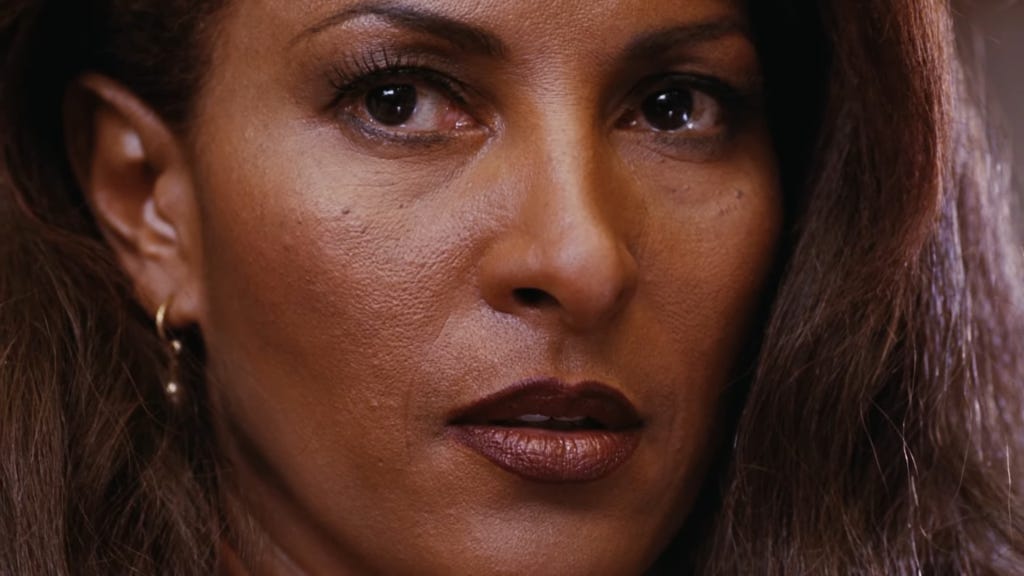
So recently I watched the movie Jackie Brown. It was on my watch list for a long time. However, given that Quentin Tarantino’s movies are very long, I feel like you really have to be in the mood to watch them attentively. Well, a few weeks ago, the day finally came. And ever since, I have been unable to get the movie out of my head, simply because of the character Jackie Brown. I have said it in a note before that I felt the deep urge to write about this character because I truly feel like we, as women, can learn so much from her. Especially in this time and age.

Jackie Brown is a 44-year-old flight attendant who has been looked past, underpaid, and ignored for years. And she is aware of it. But instead uses exactly that to her advantage. She doesn’t rage against the game as we all tend to do.
But Jackie studies it, then outsmarts it.
I felt seen because I know the familiar feeling of being the woman in the room that nobody is watching closely enough. I remember all the attempts that I have made to become more visible, just to get shut down or placed back into a place others thought was mine. And it is so draining trying to make the people see you who have decided not to.
Jackie doesn’t waste energy proving herself in rooms that do not serve her. She gets quiet, she plans, and her underestimation becomes the strategy. Jackie takes the gamble of doubling down on the long shot instead of a quick fix just to become invisible again.

So in the movie, every single man wants either to use her, save her, or control her. Okay, except for Robert Forster’s amazing and sweet character.
She actively rejects all of those conditions and restrictions. She takes what she needs from each of them and leaves on her own terms.
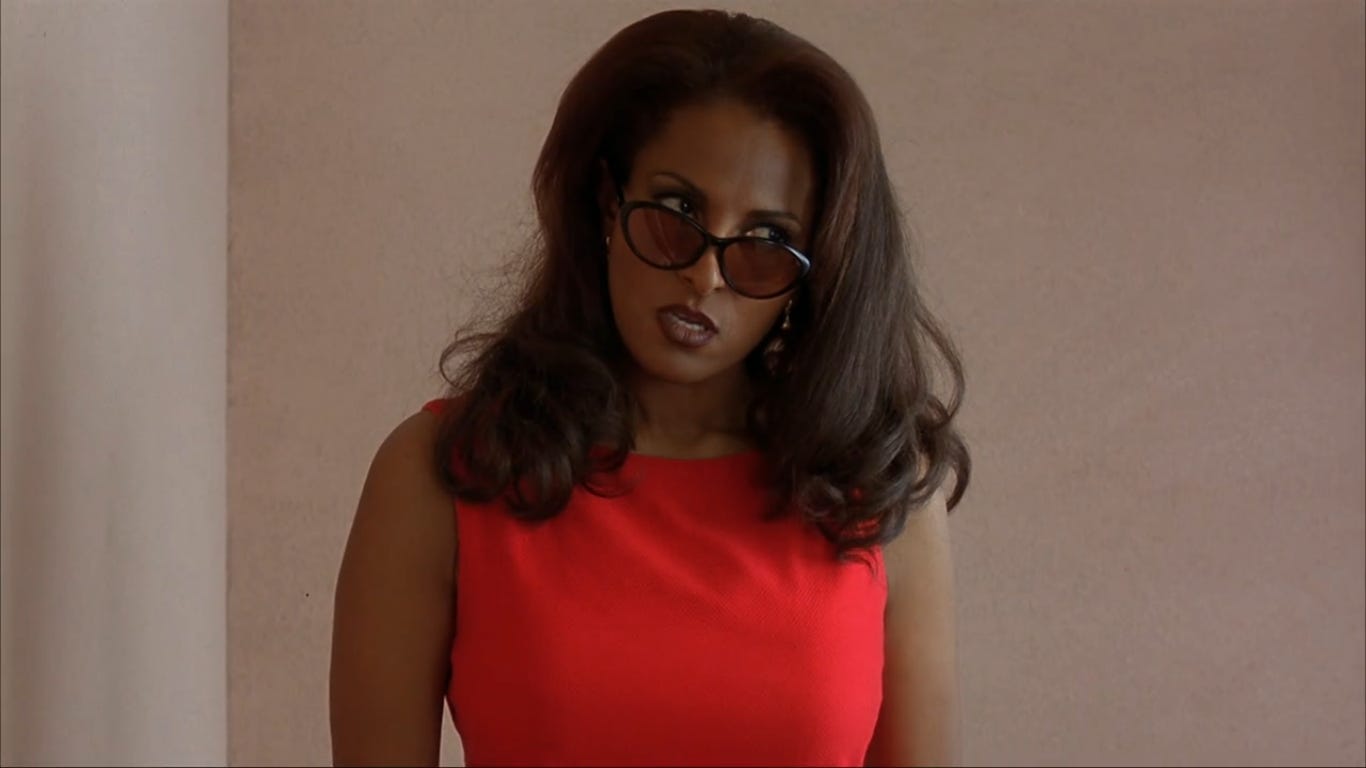
This is the direct contradiction of the “good woman” performance. We need to be agreeable, grateful, and waiting to be chosen or needed.
Everyone has a different definition of a good woman. A direct different definition is the one that men hold up for women and how women divine it for themselves. We are not even bringing different cultures into the mix yet! I know for a fact that the definition that each of us women got labeled with is not us. And that is exactly what Jackie Brown taught me.
Jackie doesn’t wait for someone to come with a version of herself that she could accept; she created her own. Crucially, she doesn’t need you to know it.

Jackie is aware of the fact that she is not young, and she also can’t afford to start over, so she decided to work smarter than she has ever done before. Quentin Tarantino made a point of casting Pam Grier at 44 and not asking her to apologise for it.
Jackie doesn’t talk about getting older and isn’t wasting energy on feeling sorry for herself. She’s way too busy being alive in her body, in her life, making moves.
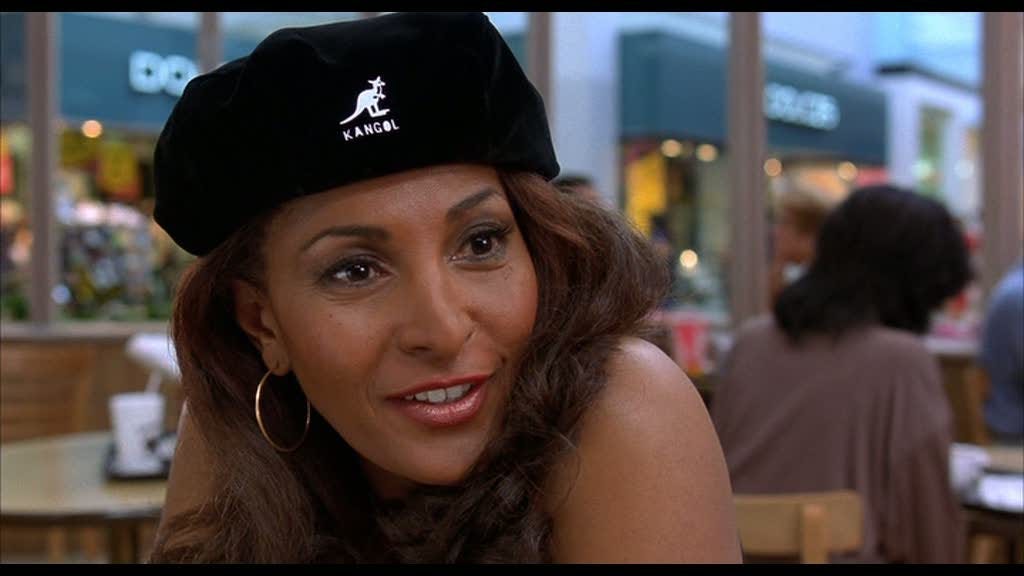
Women between the ages of 28 and 42 are already being hit with the “before it’s too late” narrative. As we watch Jackie’s timeline, we see that it isn’t a countdown. It’s a slow boil, and there is so much power in this.

Jackie Brown doesn’t monologue her values or explain her motivations, her actions are being influenced from the inside out instead of the other way around.
In my essays and with everything that newsletter Orange & Kin is In this newsletter repeatedly, I mention the values that I hold as my navigation to life instead of goals as a destination.
Because we never know what life throws at us, and for me, the way to thrive is to hold on to the things that are important to me, no matter what. Jackie embodies this. She doesn’t have a vision board. She has a clear internal compass and a gorgeous poker face.

Jackie knows that she doesn’t need to burn everything down for drama in order to have the outcome she envisions for herself. She makes one very precise, very risky move. And she is scared, but she does it anyway. Even when fearful, she still believes in herself and her abilities. Then she drives away without a trail of attention.
The fantasy of the dramatic exit is everywhere in women’s media. Where women lose control of their emotions in the most erratic form. Jackie Brown shows something rare: the controlled pivot. It is such a strategic patience that not many of us are following right now, but I wish we would. Her exit doesn’t need to be witnessed to be real.
Sometimes, when people have done us wrong, we want them to see us in the way that we want to. But I feel like some people just never will, and they do not deserve a single second of attention moving forward.

The biggest lesson I can take from this is that even though you are the loudest person in the room, you are still capable. And that is something I am still getting comfortable with. For me, writing these essays, sharing my thoughts, sharing what I care about in a way that isn’t flashy, is still worth it and does not take anything away from it.
Jackie is not a role model in the traditional sense, and that is what, in fact, makes it aspirational. She’s a fictional form of the recognition that we need to see.
Especially for women who have been grinding in the dark, in the evening hours, playing longer games than anyone knows, carrying more than anyone sees or acknowledges.
Jackie is a reflection of that.
Love,
Romy
I really like your take on this movie. The qoute "you haven't exactly set the world on fire, have you Jackie" lives permanently in my mind. Something about the pressure to live a certain kind of life or measure ourselves against certain achievements, and hearing it delivered so condescendingly by a man, has always stuck with me. You've prompted me to watch again with fresh eyes now that I've hit 40.