


It has been a long time ambition of mine to put my thoughts on paper or in this case in a newsletter and share it with all of you. It can be scary to step out of your comfort zone, but as someone once said: “Dare to color outside the lines, there is more space.” So here we go! Enjoy the reading.
Song of the week ♡
“When was the last time you felt truly empowered as a woman?”
I read this question a while ago, and I kept on thinking about it. Because, honestly, I found it a bit difficult to answer. Because I feel like there are so many layers to this question. Also, I realized two things while thinking of my own answer.
One, my answer has a conflicting taste; I am holding on to a belief that no longer defines empowerment for me. This is because of my occasional inability to switch smoothly between different roles. Or better said: not having a clear separation between roles I have as a mother, woman, daughter, friend. All elements of my life blend together. Also, the regular feeling of being in a bullet train, being in hyper-efficiency mode to make all the tasks and deadlines work and without taking the time to look where I am actually going in life and if this still aligns with my needs and desires. Should this still be a part of my story? This brings me to my second point: does women’s empowerment automatically include mothers, or do we need a separate conversation around empowering motherhood? Because desires between different roles can coexist. I do not know about you, but there can be some resistance in this area.
This brings me to my second point: does women’s empowerment automatically include mothers, or do we need a separate conversation around empowering motherhood? In many conversations about empowerment, we often focus on career, financial independence, body autonomy, and personal growth. And while all of these are so important elements, I sometimes wonder where does motherhood fit in? Is it seen as equally empowering, or is it often placed in a different category?
The desires we have within our different roles as professionals, partners, individuals, and mothers can be present in the same room. However, they don’t always coexist as smoothly as we wish. I don’t know about you, but I’ve felt the internal friction between wanting to grow and evolve as a woman, while also maintaining the same level of quality in my role as mom. And I feel a resistance. Resistance to slowing down. Resistance to asking for help. Resistance to the idea that motherhood is not only the opposite of ambition, and for me, more so of self-expression.
Personally, in the first two years as a mom of two kids, I did not feel empowered at all. With the lack of autonomy, work deadlines, lack of sleep, navigating the new dynamics within our family, feeding schedules, school runs, did I already mention the work deadlines? The sad part is that when life gets busy, the first thing I scraped from my to-do list was any self-care-related activity. Because the lack of time and the beautiful internet, we are exposed to other people's lives and their stories they share. It is easy to follow other people's stories and copy them in your own life, because it looks good on others, yet after a while, you realize it is not your story and it does not (fully) align with your desires and actual needs.
So, how do we rewrite our story?
It might be a good idea to bring awareness to the change in our brains when we become a parent. There is a piece in the book Mother Brain by Chelsea Conaboy that resonated with me. Reading this felt like finally having science validate the quiet chaos in my brain, and I would like to share it with you.
“Scientists have begun tracking how the neural reorganization caused by parenthood affects a person’s behavior, their way of being in the world, their life at large. Ask any researcher what exactly they know to date, and they’ll likely tell you, ‘far too little.’ This work is just the beginning. But the findings so far and the questions they point to are deeply meaningful in themselves. For me, studying them has been like seeing my own reflection in a storefront window along a bustling sidewalk—a chance to recognize myself.
Researchers studying women have found that new motherhood seems to alter how they read and respond to social and emotional cues, not only from their babies but perhaps also from their partners and other adults. It may change their ability to regulate their own emotions, helping them to stay calm—in a relative sense—in the face of a screaming infant (or a stubborn preschooler or a moody teenager), and to plan a response. While many people experience real but generally temporary memory loss during pregnancy and the postpartum period, motherhood in certain contexts also has been found to enhance executive functioning, affecting a person’s ability to strategize and her capacity to shift attention between tasks. Though the results are somewhat complicated to date, a small number of studies suggest motherhood may even protect cognition later in life.”
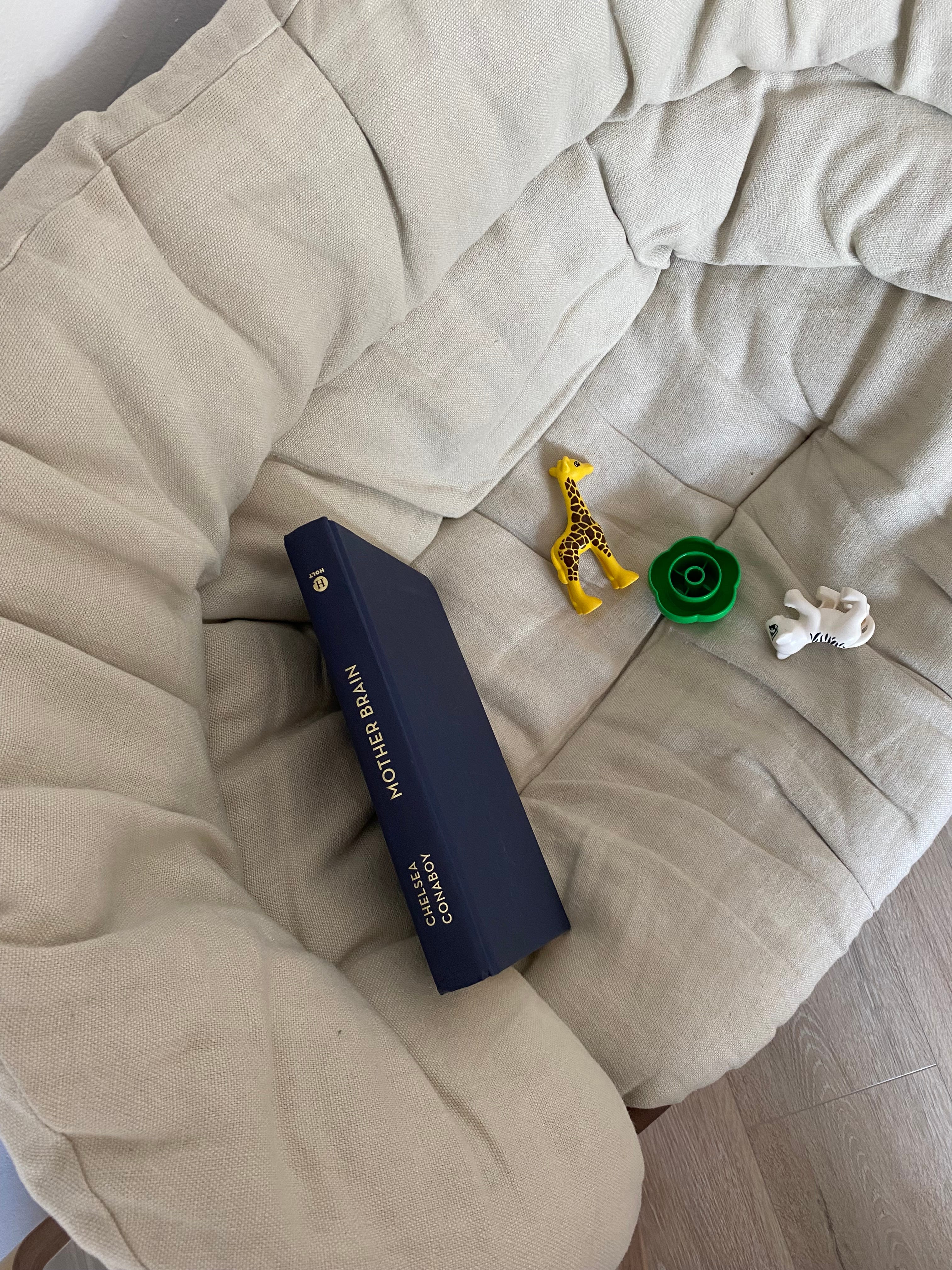
And obviously, this doesn’t cover the whole picture of the impact, but it does shine light on the size of the change we endure as women. Realizing the changes that happen on a cognitive level alone should be enough to give ourselves grace on this new chapter in our lives. Also on how to handle our inner critic. Because we have all heard these before: Why am I not able to focus during social events with friends? Why am I experiencing a disconnect with my child? However, let’s be realistic, we cannot shut our inner voices down; also, a lot of good comes from them. I realized I never took the time to educate myself on this. Luckily, because of my interest in neuroscience, I learned that I actually haven’t given myself the time to settle into this new chapter together with this new mind and body. I was expecting it to just return to its original state. Well, I could not be more wrong. Because just as when a baby is born, a mother is also born. There is no way back to the exact life as before. So, why not give ourselves some self-compassion?
So if motherhood is basically a great reset for us as women, it is no surprise that some of us, including me, can feel lost in our feminine journey. Because we try to get back to how we were doing things before we became moms. And that's where confusion and frustration can rise as it no longer aligns with our new desires and needs. Also, for years, we've been handed pre-packaged definitions of femininity for mothers—some wrapped in soft pastels and nurturing roles, others dressed in sharp suits and the mantra of "grind harder." But empowered femininity isn't a box you fit into. It's a space you create for yourself, and only you can define what lives and thrives in there.
We’ve all heard broken records like: “You can’t be soft and strong.” “You have to choose between motherhood and ambition.” “Feminine means fragile.” These narratives are outdated, boring, and worse, they're exhausting. They make us question our choices, make ourselves smaller, or push ourselves beyond what’s sustainable. So let’s skip that! Let’s take up some more space shall we? Imagine being empowered as a woman, I guess one look, role, or sound, does not define it. It’s quite dynamic actually. It’s like a cycle. Sometimes hot and spicy, sometimes quiet and calm. And the beauty is that it only needs to make sense to you.
Some tips, some tricks:
Get Honest About the Old Narratives
Start by noticing the beliefs you’ve carried around for years, the ones that subconsciously have shaped how you see yourself. Analyze them by asking: What have I been telling myself about this, and is it still true? Are they still relevant in this phase of my life?Gently Let Go
Look at these old stories with a loving but nonjudgmental eye. Which ones are holding you back? For me, releasing the default setting to be a people pleaser or stay silent was a huge step toward feeling free and fully myself.Question the Rules You Limit Yourself To
So many of the things we’ve been taught, especially as women, are about staying small, quiet, or agreeable, just keeping it simple here for now. When we do, we create space to write something new. Remember, outside the box, there is more space.Speak It Out Loud
When you share your truth, especially with other women, something shifts. You realize you’re not alone, and that connection can be so healing. You’re not just living your story. You get to write it, too.

I hope all of this helps you with your journey to rewrite your (new) story, as it helped me. I guess what I have learned is that empowerment isn’t about having it all figured out. Perhaps, it’s about creating the time and space for you to figure it out. Empowerment is a continuous journey, not a destination. Walk hand in hand with my truth, even if it changes tomorrow. Try giving myself permission to be the woman I am becoming, not the one others expect me to be.
So perhaps this is a reminder we all need once in a while: Your femininity is not a performance. It’s a presence. Your version of empowered femininity is already within you. Take a moment to answer the question for yourself:
“When was the last time you felt truly empowered as a woman, as a mother, as yourself?”
Love,
Romy